
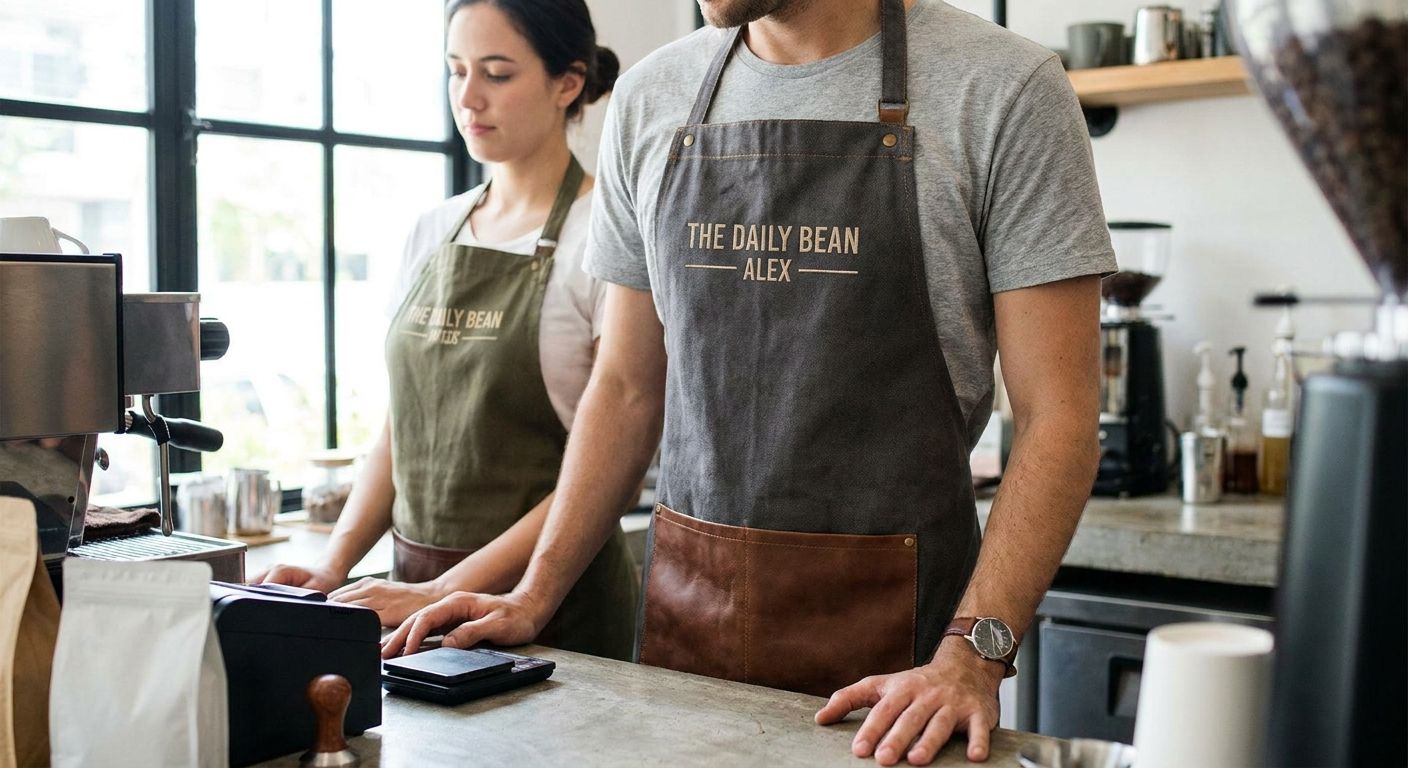
Custom aprons for restaurant and cafe staff are printed or embroidered work aprons carrying a logo, name, or role label, ordered to standardize how your front-of-house and kitchen team looks to customers. A cafe counter crew has different needs than a full-service kitchen: cafe aprons need pockets for pens and order pads, while kitchen aprons need heavier fabric and stain resistance. Print Fast recommends matching apron style to the shift, not the brand, first — then layering the logo on top.
- Custom aprons for restaurant and cafe staff should match the role first: bib for kitchen, waist for counter service, cross-back for baristas.
- Embroidered logos outlast screen print and heat-transfer under repeated commercial laundering.
- Order in role-based batches (kitchen, counter, management) rather than one universal size and style.
- Print Fast pairs apron programs with matching name tags and rush printing when a launch date is tight in 2026.
Why custom aprons matter for restaurant and cafe staff
A server or barista in a plain black apron reads as generic. A server in a branded apron with a visible custom name tag reads as a trained employee of a specific business — that distinction matters more in cafes and quick-service spots where staff face customers directly for the entire shift, not just at checkout.
Restaurants and cafes also turn over apron stock faster than most retail uniforms because of grease, bleach, and daily washing. That means the buying decision isn't one-time — it's a recurring reorder, and getting the size and print method right the first time saves a second order six months later.
Define the apron roles before you order
Don't order one apron style for the whole staff. Kitchen, counter, and management each have different physical demands.
- Kitchen/prep staff — need full bib coverage, heat resistance near the waist, and a fabric that survives daily bleach washing.
- Counter/barista staff — need shorter waist or cross-back aprons with a pen pocket and no bib bulk against the espresso machine.
- Servers — need a mid-length apron with a check-book pocket and enough visible chest space for a logo.
- Managers/shift leads — sometimes get a distinct color or trim so customers can spot them without asking.
Choose the apron style for your service model
- Bib apron: full front and chest coverage, best for line cooks and dishwashers.
- Waist apron: hips down only, best for baristas and counter staff who need mobility.
- Cross-back apron: no neck strap, best for staff on shift 6+ hours since it distributes weight across the shoulders.
- Denim or canvas apron: heavier weight, best for open kitchens where the apron is part of the visual brand, not just protection.
Pick a printing method that survives commercial laundering
The print method decides how long the logo lasts, not just how it looks on day one.
- Embroidery: holds up best through repeated hot-water washing, standard advice from commercial apparel decorators.
- Screen printing: crisp for large logo runs, holds color well on cotton and canvas.
- Heat-transfer vinyl: fastest turnaround for small batches but wears faster under daily bleach cycles.
- Direct-to-garment (DTG): good for detailed, multi-color logos on lower-volume orders.
Design for visibility, not decoration
A logo that looks great on a screen can disappear once it's on dark fabric under kitchen lighting.
- Keep the logo to one focal point — chest center or upper-left, not scattered across the apron.
- Use a contrast color against the apron fabric, not a tone-on-tone print that vanishes under fluorescent light.
- Add the business name in text even when the logo is a symbol — customers read words faster than icons.
- Skip fine line detail; it clogs or fades faster on woven fabric than on paper.
Order sizes and quantities by role, not by headcount
A 20-person staff isn't one order of 20 identical aprons — it's usually three or four smaller batches.
- Order 10-15% extra kitchen aprons since they take the most physical wear and bleach damage.
- Keep one universal size for counter staff aprons since waist ties adjust for most builds.
- Order management/shift-lead aprons in a distinct trim color as a separate small batch.
- Hold a small reserve batch (5-10 units) in storage for new hires so onboarding doesn't wait on a reorder.
Order rush or same-day when a launch date won't move
A new location opening, a rebrand, or a health-inspector visit doesn't wait for a standard print queue. Print Fast runs 1Hr, Same Day, and 24Hr turnaround on rush jobs for Toronto and GTA businesses, which matters when a grand opening date is locked and the apron order was the last thing on the checklist.
Standardize the whole front-of-house look
Aprons alone don't finish a uniform program — pair them with custom name tags so every staff member is identifiable at a glance, and consider a matching custom t-shirt order for staff who work without an apron on, like hosts or delivery runners.
Set a reorder cadence before stock runs low
Most restaurants underestimate how fast aprons wear out. Set a recurring check every quarter in 2026 rather than waiting for a staff member to show up in a stained, unbranded apron on a busy Friday shift.
Comparison: apron styles for restaurant and cafe staff
| Style | Best for | Key limitation |
|---|---|---|
| Bib apron | Kitchen and prep staff | Bulkier, less mobile at a counter |
| Waist apron | Baristas and counter staff | Less torso protection from splashes |
| Cross-back apron | Long shifts (6+ hours) | Less coverage than a full bib |
| Denim/canvas apron | Open kitchens, brand-forward spots | Heavier, slower to dry between washes |
Verdict: cross-back for counter staff, bib for kitchen — running one universal apron style across both roles is the single most common ordering mistake restaurants make.
Common mistakes restaurants and cafes make ordering aprons
- Ordering one size for everyone — a one-size-fits-all apron looks sloppy on a staff with a wide range of builds; adjustable ties matter more than a stated size.
- Choosing heat-transfer print for kitchen staff — kitchen aprons get washed daily in hot water and bleach, which is exactly the environment heat-transfer holds up worst in.
- Skipping the pocket check — baristas and servers need a pen or order-pad pocket; kitchen staff usually don't. Ordering the wrong pocket layout for the role means staff improvise, and the apron looks inconsistent on shift.
- Waiting until launch week to order — apron programs get bundled into an opening checklist and then forgotten until the week before doors open, forcing a rush order that could've been avoided.
- No reorder plan — without a quarterly stock check, a torn or stained apron stays on shift because nobody flagged the reorder.
Get a custom apron quote today
Rush, same-day, or standard turnaround for Toronto and GTA restaurants.
FAQ
What's the best apron style for restaurant staff?
A bib apron is best for kitchen and prep staff, while a waist or cross-back apron works better for counter and barista roles. Matching the style to the role matters more than picking one apron for the whole team.
Is embroidery better than screen printing for aprons?
Embroidery generally outlasts screen printing and heat-transfer under repeated commercial laundering. Screen printing still works well for larger logo runs where wash frequency is lower.
How many aprons should a restaurant order per staff member?
Order 10-15% extra for kitchen roles since they see the most wear, plus a small reserve batch of 5-10 units for new hires. Counter staff can usually run on a tighter buffer since waist-tie aprons fit most builds.
Can custom aprons be rush ordered for a grand opening?
Yes, rush and same-day printing turnaround exists specifically for launch-date deadlines in 2026. Build in the apron order at the same time as signage and menus, not as an afterthought.
Do cafe staff need a different apron than kitchen staff?
Yes — baristas need pockets for pens and order pads and lighter, cross-back designs for long shifts, while kitchen staff need heavier, bleach-resistant bib coverage. Ordering one universal apron for both roles is a common mistake.
What fabric holds up best for restaurant aprons?
Canvas and denim hold up longest under daily washing and heat exposure, though they take longer to dry between shifts than lighter cotton blends. Kitchen environments favor the heavier fabric despite the slower dry time.
Should management wear a different apron color?
Many restaurants order a distinct trim color for shift leads and managers so customers can identify them without asking. It's a small batch order, separate from the main staff run.
One last thing
The apron isn't the last uniform decision — most restaurants that standardize aprons in 2026 also add name tags in the same order cycle, since a branded apron without a visible name still leaves the customer guessing who they're talking to.
Order apparel and accessories from Print Fast: apparel and accessories at PrintFast.ca. Need a price first? Submit a custom quote request.


