
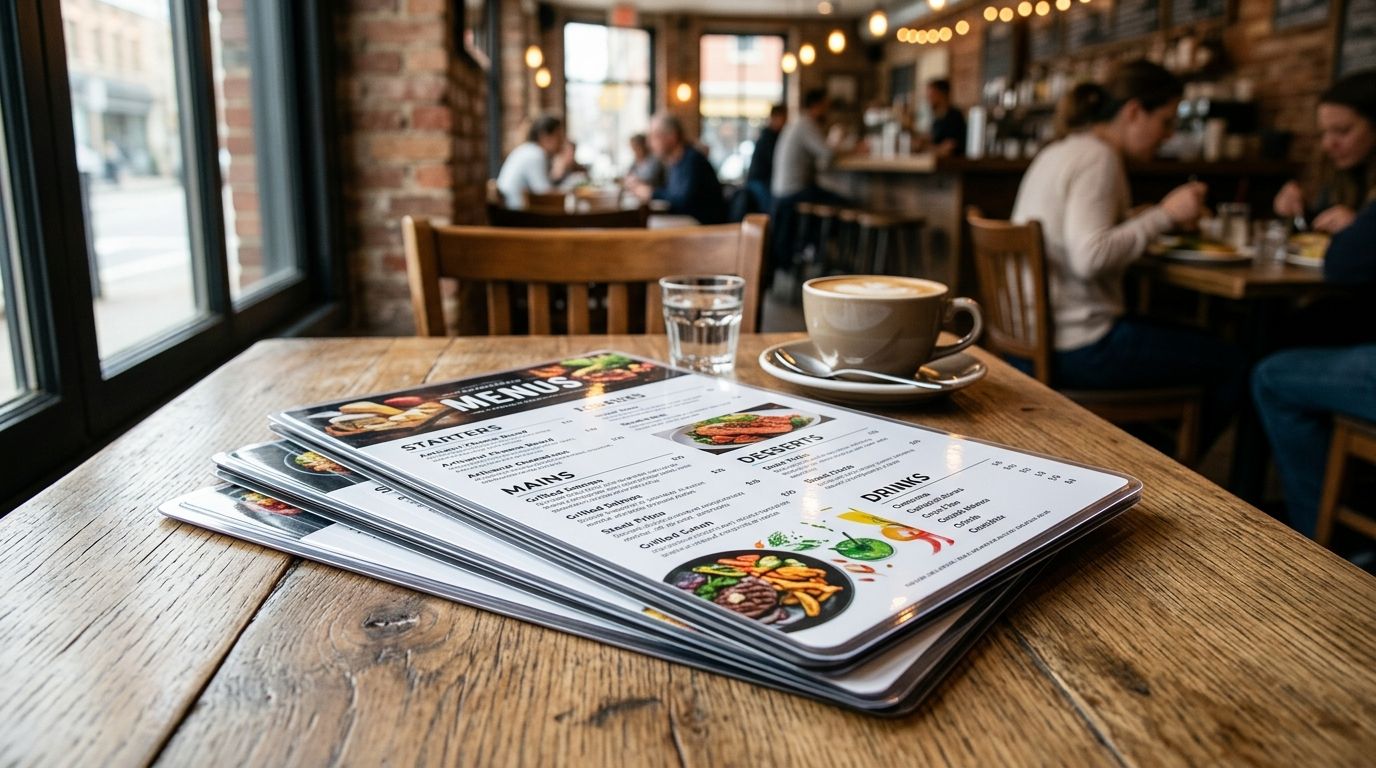
Laminated menus for restaurants and cafes are single or multi-page menus sealed in a plastic film that resists spills, grease and daily handling, with the goal of cutting reprint costs while keeping the menu looking new service after service. A quick-service cafe replacing a coffee menu every season has different needs than a full-service restaurant that touches its menu 200+ times a day between tables, servers and cleaning wipes.
- Laminated menus for restaurants and cafes survive spills and daily wipe-downs where uncoated paper tears within weeks.
- 3 mil lamination fits single-page cafe menus; 10 mil suits high-traffic dine-in tables that get scrubbed daily in 2026.
- Print Fast prints laminated menus with same-day and rush turnaround for Toronto and GTA restaurants.
- Table tent cards and NFC business cards pair with laminated menus to promote specials without reprinting the full menu.
Why laminated menus matter for restaurants and cafes
A menu is the highest-touch print piece in a restaurant. Servers hand it out, guests fold it, kitchen staff wipe it down between seatings, and a busy dinner service can put a single menu through dozens of hand-offs in one night. Uncoated paper menus stain, curl and tear inside a few weeks under that kind of handling, forcing owners into a reprint cycle that eats into margin.
Lamination solves the durability problem, but restaurants and cafes have a second constraint general print buyers don't: menus change. Seasonal items, price adjustments and 86'd dishes mean the reprint cadence matters as much as the coating. That's why the right lamination thickness, page count and turnaround window matter more here than for a static print piece like a poster or sign.
Choose the right lamination thickness
Start by matching the film thickness to how often the menu gets handled, not how the menu looks on the shelf.
- 3 mil film suits single-page cafe menus changed every few months
- 5 mil film handles standard dine-in menus at moderate volume restaurants
- 10 mil film is built for tabletop menus wiped down daily with disinfectant
- Matte finish cuts glare under overhead lighting; gloss finish reads better in dim, candlelit rooms
- Rounded corners reduce tearing at the edges where hands grip the menu most
Pick a menu size and fold format
Menu size drives both readability and how the menu fits your table setting or counter display.
- 8.5x11 single sheet works for cafes and quick-service counters
- 8.5x14 legal size fits full-service restaurants with more dish categories
- Bi-fold or tri-fold formats separate food, drinks and specials into distinct panels
- A5 half-page menus suit compact bar or brunch programs
- Confirm the fold direction doesn't crease through key pricing or dish names
Decide single-sided vs double-sided printing
A single-sided menu is cheaper to update; a double-sided menu fits more content on one physical piece guests don't have to flip through as often.
- Single-sided menus are faster and cheaper to swap when one item changes
- Double-sided menus cut the number of pieces a server hands out per table
- High-turn restaurants favor single-sided so a price change doesn't waste a full double-sided run
- Cafes with a short, stable menu can run double-sided without much reprint risk
Once the format is locked, the fastest path is ordering laminated menus directly from Print Fast, which prints and laminates in the same run instead of sending the job to two vendors.
Handle price updates without a full reprint
Menus change more than any other print piece in a restaurant, so plan the layout to absorb updates cheaply.
- Group prices in one column so a single reprint covers the whole menu
- Keep a digital source file on hand so reorders don't require a redesign
- Order in smaller batches (25-50 menus) if prices shift seasonally
- Use a removable insert page for daily specials instead of reprinting the core menu
- Reserve a same-day or 24-hour turnaround option for last-minute price corrections before a weekend rush
Add table tents and other menu touch points
A laminated menu doesn't have to carry every promotion by itself. Splitting content across pieces keeps the core menu stable while specials rotate underneath it.
- Table tent cards hold daily specials or drink promotions without touching the main menu
- Drink lists on separate laminated cards let bar programs update independent of the food menu
- Custom coasters reinforce a logo or seasonal promo at the table
- QR-code inserts point guests to an online menu for full nutritional or allergen detail
- A-frame signage out front can flag menu changes before guests even sit down
Order laminated menus for 2026 service
Same-day and rush printing for Toronto and GTA restaurants and cafes.
Order for same-day or rush turnaround
A weekend price error or a torn menu stack can't wait a week for reprints.
- Confirm same-day or 24-hour options before a Friday or holiday rush
- Order extra menus (10-15% above table count) to cover spills and tears between reprints
- Keep artwork files saved so a rush reorder doesn't need a redesign step
- Ask about local delivery timing if you need menus on-site before doors open
A laminated menu that gets wiped down daily needs 10 mil film and rounded corners, not the 3 mil finish that works fine on a seasonal cafe card. That single spec choice is the difference between a menu that lasts a full quarter and one that peels at the corners inside three weeks.
Comparison: menu format options for restaurants and cafes
| Option | Best for | Key limitation |
|---|---|---|
| Laminated single-page menu | Cafes and quick-service counters with short, stable menus | Full reprint needed for any price change |
| Laminated multi-page (bi-fold/tri-fold) | Full-service restaurants with several dish categories | More expensive to update than single-page |
| Table tent cards | Rotating specials and drink promos alongside a fixed menu | Not a substitute for the full menu |
| Digital QR-code menu | Frequent price changes, allergen detail | Some guests still expect a printed menu at the table |
Verdict: laminated menus win on durability and guest experience; table tent cards win on update speed for rotating specials. Most restaurants run both side by side rather than picking one.
Common mistakes restaurants and cafes make with laminated menus
- Choosing 3 mil film for a high-traffic dine-in table — it tears at the fold inside a month under daily wiping.
- Printing prices scattered across the layout instead of one column, which turns a one-item price change into a full redesign.
- Skipping rounded corners on menus handled by servers dozens of times a shift, which speeds up edge tearing.
- Ordering the exact table count with no buffer, leaving the restaurant short the moment one menu gets stained or torn.
- Waiting until the menu is already damaged to reorder instead of keeping a rush turnaround option on file for the next price change.
FAQ
What's the best lamination thickness for a restaurant menu?
10 mil film holds up best for menus wiped down daily at the table; 3 mil is enough for a cafe menu changed every few months. Thicker film costs more per piece but cuts the reprint cycle significantly.
Are laminated menus better than paper menus for restaurants?
Yes, for any menu handled more than a few times a day. Paper menus stain and tear within weeks under regular service, while laminated menus wipe clean and hold up for months.
How often should a laminated menu be reprinted?
Reprint whenever prices or dish lineups change, not on a fixed schedule. Grouping prices in one column keeps reprints cheap even with frequent menu updates in 2026.
Can I laminate a double-sided restaurant menu?
Yes, double-sided lamination works well for stable menus that don't need frequent price changes. High-turn restaurants with rotating specials usually do better with single-sided menus plus a separate table tent card.
Do laminated menus work for cafes with a short menu?
Yes, a single 3 mil laminated sheet covers most cafe counters and holds up fine against light daily handling. Larger dine-in operations need thicker film and rounded corners for daily wear.
How fast can a restaurant get laminated menus reprinted?
Same-day and 24-hour turnaround is available for rush menu reorders through Print Fast, which matters most before a weekend service or holiday rush. Keeping the artwork file on hand speeds up any reorder.
What size should a restaurant menu be?
8.5x11 single sheet fits most cafes and quick-service counters, while 8.5x14 legal or a bi-fold format suits full-service restaurants with more dish categories. Match the size to how many items the menu needs to list clearly.
One last thing
Most restaurants budget for the lamination but not for the corner rounding, and it's the corners that fail first under daily handling in 2026 service. A $0.10-per-piece corner round adds weeks of life to a menu that would otherwise start peeling at the exact spot every guest grips first.


