
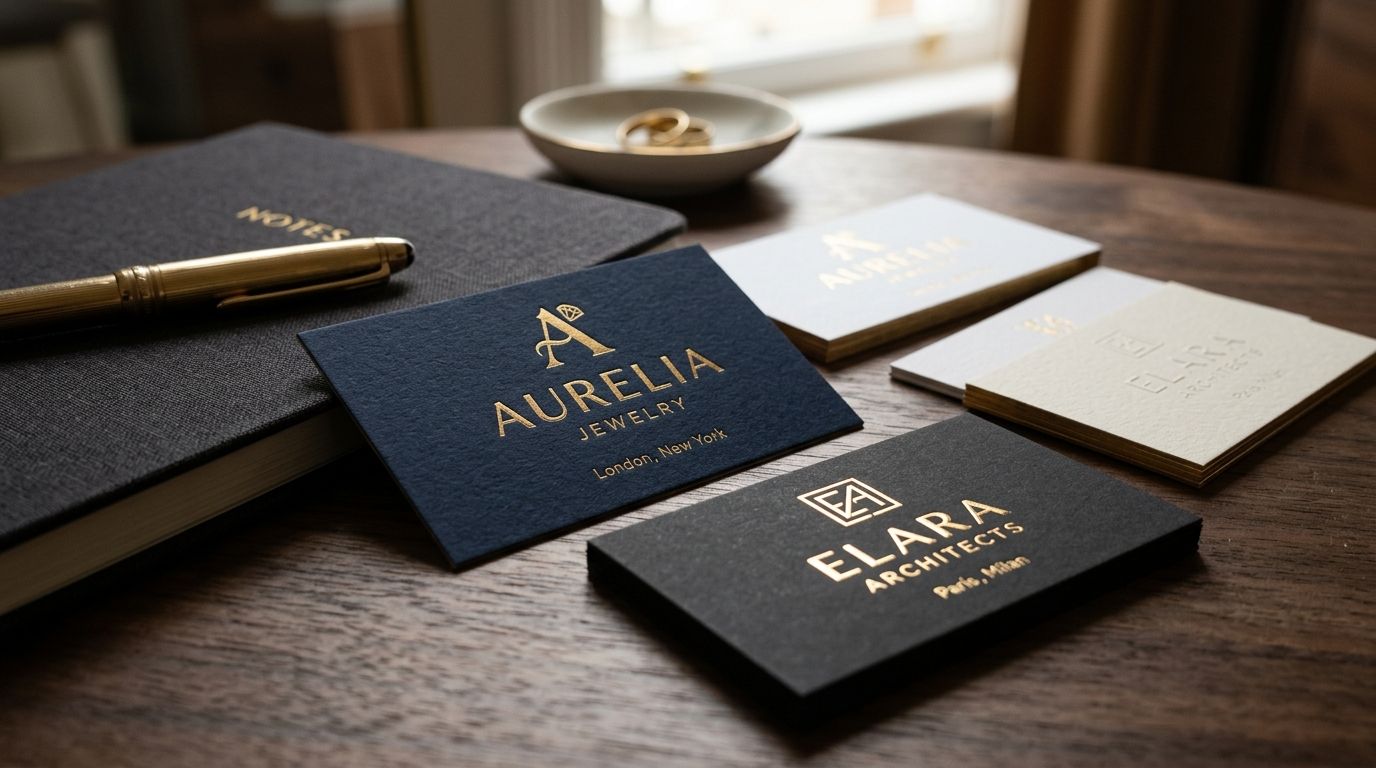
Luxury brands lose credibility the second a business card feels flimsy — a flat matte finish, curling corners, or ink that rubs off in a pocket undoes months of brand positioning in one handshake. This guide ranks the premium business cards finishes and formats worth ordering in 2026, and tells you which one matches how your brand actually presents itself.
- Soft-touch laminated business cards win overall for minimalist luxury brands that want a premium first touch.
- Foil-stamped business cards are the pick for logo-forward luxury retail; edge-painted suits design-led studios.
- NFC-embedded premium business cards fit luxury real estate and high-touch networking brands in 2026.
- Print Fast produces all six premium finishes in Toronto with Same Day, 24Hr and Rush turnaround options.
Why this matters
A business card is often the only physical object a prospect keeps from a first meeting. For a luxury brand, that card either confirms the price point the brand is charging or quietly contradicts it.
Most card printers offer one or two "premium" options and call it a day. Toronto and GTA business owners shopping for premium business cards in 2026 have at least six distinct finishes to choose from, each suited to a different kind of luxury positioning — minimalist, retail-forward, hospitality, design-led, artisanal, or tech-forward. Print Fast produces all six locally with custom quotes and rush timelines, which matters when a card order is tied to a launch date.
What makes the best premium business card
Before ranking anything, these are the traits that separate a genuinely premium card from a card that just says "premium" on the order form:
- Stock weight — 16pt is standard; premium cards typically start at 18-32pt for a stiffer, more substantial feel in hand.
- Finish and texture — matte, soft-touch, uncoated cotton, or gloss spot treatments each send a different signal.
- Printing technique — foil stamping, spot UV, letterpress, and edge painting all raise production complexity and visual impact.
- Edge treatment — a painted or beveled edge is one of the fastest ways to make a stack of cards look custom.
- Durability and legibility — the finish should still read clearly and hold up after weeks in a wallet or card case.
- Turnaround reliability — a premium finish is only useful if it arrives before the event or meeting it's for.
Premium business cards at a glance
| Card Style | Best For | Standout Feature | Key Limitation |
|---|---|---|---|
| Soft-Touch Laminated | Minimalist luxury brands | Velvety matte texture | Shows fingerprint smudges over time |
| Foil-Stamped | Logo-forward luxury retail | Metallic finish catches light | Fine detail can lose crispness in foil |
| Spot UV Raised-Ink | Boutique hospitality | Tactile contrast on matte base | Raised coating can chip if bent |
| Edge-Painted | Design-led creative brands | Painted edge visible in a stack | Paint can chip at corners |
| Cotton/Suede Uncoated | Heritage and artisanal brands | Handmade, paper-like texture | Smudges more easily, bends at corners |
| NFC-Embedded Premium | Luxury real estate, networking | Taps to share contact instantly | Needs reprogramming if details change |
1. Soft-Touch Laminated Business Cards: best premium business cards for minimalist luxury brands
Soft-touch lamination coats the card in a velvety matte layer that immediately feels different from a standard glossy or uncoated card. It's the closest thing to a default premium finish for brands that lean minimalist — clean logo, lots of white space, no clutter.
Soft-touch laminated pros:
- Feels premium the instant someone touches it
- Muted, elegant color reproduction suits minimalist branding
- More resistant to cracking or bending than uncoated stock
Soft-touch laminated cons:
- Shows fingerprint oils and smudges with heavy handling
- Metallic foil doesn't sit as crisp on soft-touch laminate as it does on uncoated stock
Best for: minimalist luxury brands, professional services, consultants who want understated instead of flashy. Verdict: Buy.
2. Foil-Stamped Business Cards: best premium business cards for logo-forward luxury retail
Heat-applied metallic foil — gold, silver, rose gold, copper — gets stamped onto the card to raise and highlight a logo or wordmark. This is the finish that reads "retail flagship" rather than "back office."
Foil-stamped pros:
- Metallic finish signals luxury retail on sight
- Foil catches light and pulls the eye to a wordmark or monogram
- Reads especially strong on dark stock for high contrast
Foil-stamped cons:
- Very fine text or thin lines can lose sharpness in the foil process
- Combining foil with lamination adds a production step and extends lead time
Best for: boutique retail, flagship storefronts, brands with a strong wordmark. Verdict: Buy.
3. Spot UV Raised-Ink Business Cards: best premium business cards for boutique hospitality
Spot UV applies a glossy, slightly raised coating over specific parts of the card — a logo, a monogram, a name — while the rest of the card stays matte. The contrast between the two textures is what sells it.
Spot UV raised-ink pros:
- Tactile contrast reads premium at a lower production step than full foil
- Works cleanly over soft-touch or uncoated bases
- Flatters detailed logos, crests, and monograms
Spot UV raised-ink cons:
- The raised coating can chip if the card bends sharply in a wallet
- Loses impact on light-colored or visually busy backgrounds
Best for: boutique hotels, restaurants, and hospitality brands with a crest or monogram. Verdict: Buy.
4. Edge-Painted Business Cards: best premium business cards for design-led creative brands
Edge painting colors the sides of the card stock — usually matched or contrasted against the front design — so the effect shows even when the cards are stacked in a holder. It's the finish that gets noticed before the card is even flipped over.
Edge-painted pros:
- Distinct visual signature that stands out in a card case
- Pairs especially well with thick 32pt+ stock for a substantial feel
- Signals a design-forward, boutique brand identity
Edge-painted cons:
- Paint can chip at the corners with heavy day-to-day handling
- Doesn't suit brands aiming for a conservative, understated look
Best for: design studios, architects, creative agencies. Verdict: Buy for design-led brands, skip for conservative professional services.
5. Cotton/Suede Uncoated Business Cards: best premium business cards for heritage and artisanal luxury brands
Thick, uncoated cotton-fiber stock has a soft, paper-like texture with none of the plastic feel of laminated cards. It's a favorite for brands built on craftsmanship or heritage positioning, and it takes foil or letterpress impressions cleanly.
Cotton/suede uncoated pros:
- Texture feels handmade rather than mass-produced
- Takes foil stamping and letterpress cleanly
- Reads as heritage or artisanal rather than corporate
Cotton/suede uncoated cons:
- More prone to smudging from ink or fingerprints than coated stock
- Corners bend more easily than laminated or coated cards
Best for: artisanal makers, heritage brands, handmade-positioned luxury goods. Verdict: Buy.
6. NFC-Embedded Premium Business Cards: best premium business cards for luxury real estate and networking-driven brands
An embedded chip lets the card share contact details, a listing, or a booking link the moment it's tapped against a phone, and it's usually paired with a premium finish like soft-touch or foil so it doesn't look like a gimmick. NFC business cards for real estate agents walk through the setup in more detail.
NFC-embedded premium pros:
- Combines a premium finish with instant digital contact sharing
- Most taps work without the recipient installing an app
- Fits a tech-forward brand image for agents and high-volume networkers
NFC-embedded premium cons:
- The chip adds a production step, so plan for a longer lead time than a standard rush order
- The card needs to be reprogrammed if contact details or links change
Best for: luxury real estate agents, consultants, and anyone attending frequent networking events. Verdict: Buy.
Get a Custom Quote on Premium Cards
Same Day, 24Hr and Rush turnaround available across the GTA.
How this ranking was built
Each finish was weighed against the same six criteria: stock weight, finish and texture, printing technique, edge treatment, durability, and turnaround reliability. Soft-touch laminated ranks first because it clears every criterion at a moderate production complexity — it's premium without being fragile. Foil, spot UV, and edge-painting move up or down the list depending on how much visual boldness a brand wants versus how much handling durability it needs. NFC-embedded cards rank last in setup simplicity but first in functional value for brands that live on networking.
Brands ordering for freelancers or solo consultants instead of a retail storefront should check best business cards for freelancers and consultants for a simpler comparison built around that use case.
Which premium business card should you choose?
If you're still undecided after reading all six, default to soft-touch laminated business cards — the finish clears the highest number of criteria with the fewest tradeoffs, and it works across almost every luxury category from professional services to retail. Add foil stamping if your logo needs to be the focal point, or move to edge-painted or cotton stock if your brand identity is built on craft rather than polish. Reserve NFC-embedded cards for roles where the contact exchange itself is part of the pitch, like real estate or high-frequency networking in 2026.
FAQ
What makes a business card count as premium in 2026?
A premium business card combines thicker stock (18pt or higher), a distinct finish like soft-touch lamination, foil, or spot UV, and a printing technique beyond standard flat-color offset. Edge treatments and uncoated cotton stock also push a card into premium territory.
Is foil stamping better than soft-touch lamination for luxury brands?
Neither is universally better — foil stamping suits logo-forward retail brands that want a metallic focal point, while soft-touch lamination suits minimalist brands that want an understated, tactile feel. Pick based on how bold your brand identity already is.
How much does a premium business card cost compared to a standard card?
Cost varies by finish, stock weight, and order quantity, so get a custom quote for your specific specs rather than relying on a general estimate. Foil and NFC-embedded cards typically add more production steps than soft-touch or spot UV.
Can premium business cards be printed same day?
Simpler premium finishes like soft-touch lamination and spot UV can often move on Same Day or 24Hr timelines, while foil stamping, edge painting, and NFC-embedded cards usually need more lead time. Confirm your finish and deadline together before ordering.
Do NFC business cards still need a premium finish?
Yes — an NFC chip only adds function, it doesn't replace the tactile impression of the card itself. Pairing NFC with soft-touch or foil keeps the card feeling premium instead of gimmicky.
What's the most durable premium business card finish?
Soft-touch laminated and foil-stamped cards on coated stock tend to hold up best against bending and wear. Uncoated cotton stock and edge-painted cards look distinctive but show wear at the corners faster.
Should a law firm or accountant use a flashy premium finish?
Conservative professional services generally do better with soft-touch lamination or subtle spot UV rather than bold foil or edge painting, which can read as too flashy for that audience. Match the finish to the trust signal the brand needs to send.
One last thing
The single most common mistake luxury brands make with premium business cards isn't the finish choice — it's ordering the premium finish and then skipping the stock weight upgrade. A soft-touch or foil finish on standard 16pt stock still feels thin in hand; pairing the finish with 18-32pt stock is what actually delivers the substantial, high-end feel most brands are paying for.


